Is being nice kind?
My soldier was about to be sent to military prison. He was breaking the rules to feed his family, and my superiors had run out of patience. Here is the story of why I screamed at a crying man to save him from a cell.
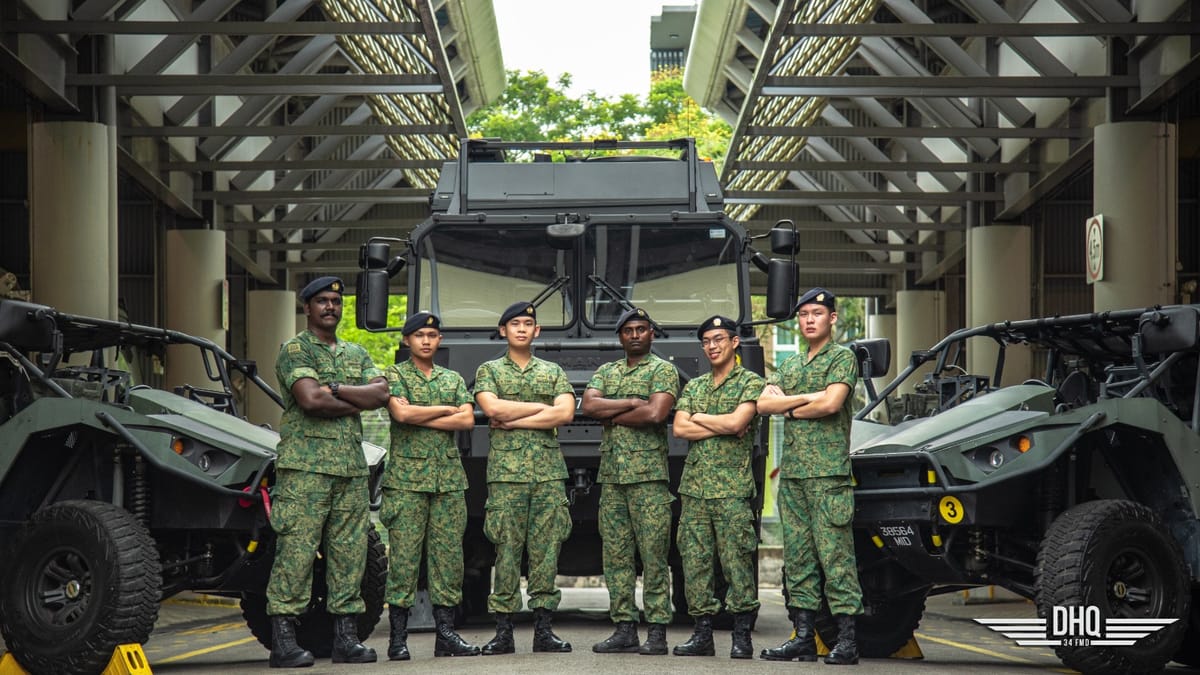
There is a misconception that being a "good" commander in National Service means being the "nice" commander.
I fell into that trap early on. As a newly minted Platoon Commander taking care of 30+ men—many of whom were struggling with physical or mental health issues—I led with empathy. I knew that for these guys, NS wasn't just an obligation; it was often an interruption to a difficult life. But I learned the hard way that sometimes, being nice is the cruelest thing you can do. I had one soldier who was slipping through the cracks. He was failing his BMT, but the real issue was his attendance. He was constantly on Medical Leave (MC).
He owned a motorbike and we knew he was frequently traveling to Malaysia without declaring it—a major breach of our unit’s SOP. We warned him. We reminded him. He didn’t listen.
On paper, he was a defiant soldier "gaming the system."
In reality, he was desperate. He was moonlighting to pay for his bike and, more importantly, to support his siblings. He was often late because he was sending them to school. NS had taken away his livelihood, and he was breaking the rules just to keep his family afloat.
His truancy got so bad that we decided to track him. We caught him outside his home when he was supposed to be resting on MC. He apologized profusely, claiming he had an urgent bill to pay, but it was too late. My Officer Commanding (OC) had seen enough. He was preparing to charge him.
For those outside the military, "charging" usually means Detention Barracks (DB). It means a criminal record within the service. It means pausing his service time. For a guy already struggling to feed his siblings, sending him to jail would have destroyed him.
I couldn't let that happen.I decided to take matters into my own hands.
I called him into the HQ office.
I am not a naturally aggressive person. I pride myself on treating my men with respect and giving them purpose. But that day, I had to become someone else.
I demanded to see his phone. I made him open his Google Maps location history. And then, I exploded.
I screamed at him. I threatened him with the full weight of military law. I told him exactly what would happen if he didn't wake up: the jail time, the extended service, the prolonging of his pain. I watched his face turn from jovial playfulness to absolute fear. He broke down crying, begging me not to charge him.
It was the hardest thing I’ve ever done as a leader. It felt entirely out of character. But it was necessary. I wasn't screaming to hurt him; I was screaming to save him.
Once I saw that the gravity of the situation had finally clicked, I dropped the act. I lowered my voice.
I explained to him, calmly, that I didn't want to punish him. I told him that the rules—reporting overseas trips, asking for permission—weren't just red tape. They were there to protect him. I explained that by trying to handle everything alone, he was backing himself into a corner that I couldn't pull him out of.
I told him: "I am doing this because I care enough to ensure you don't end up in a worse place."
That conversation changed everything.
From that day on, he showed up. He started coming to work on time. We gave him a permanent task to handle, and he took ownership of it. He found a purpose. He made friends. He realized that his commanders weren't just targets to push over, but people who actually gave a damn about him.
Later, my OC called me into his office. He told me he had heard me screaming my lungs off from down the hall.
I thought I was in trouble. Instead, he told me I did a good job. He revealed that he had already decided to charge the soldier—but seeing me take the initiative to discipline him personally, he decided to give the man one last chance. That soldier finished his service without seeing the inside of a cell.
I learned that day that leadership isn't about being liked. It’s about doing what is necessary for the people under your charge, even if it makes you the bad guy in the moment. Sometimes, a firm hand is the kindest tool you have.