The Binary Trap: Why We Label People Good or Bad
We often label people as "good" or "bad". But these labels usually reflect the environment we put them in, rather than their actual abilities. Here is why leaders need to stop lazy labelling and start looking at the bigger picture.
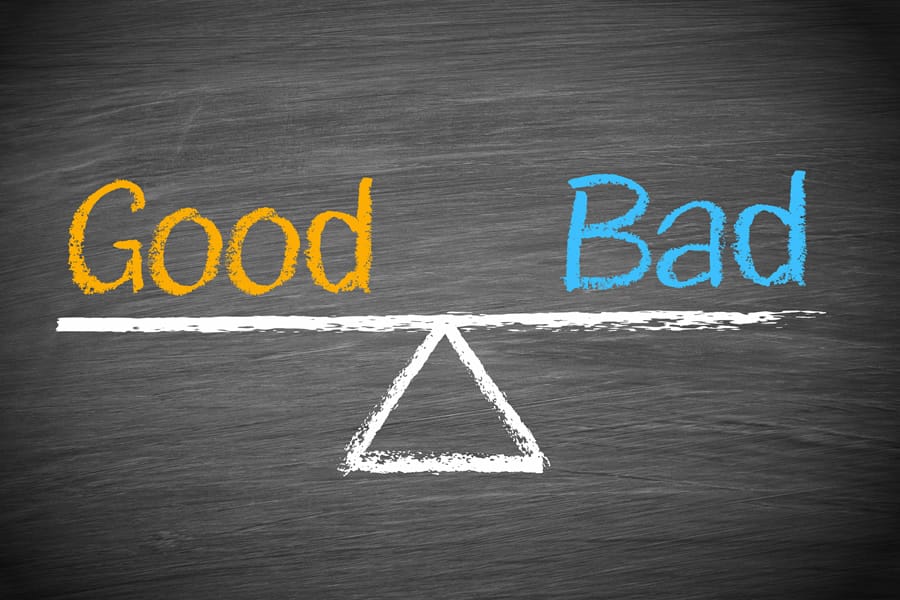
Summary
- The Binary Trap: Exposing the flaw in "Good/Bad" labelling where rigid "Good/Bad" sorting mistakes temporary environmental friction for a lack of capability.
- The Microscope Effect: Understanding hyper-scrutiny. Once Person B makes a mistake, every action is over-analysed, while Person A benefits from a halo effect.
- The Environment Factor: Why performance is often a function of system design, clear guidance, and role-fit.
- NS Example: How shifting from an execution role to a leadership position during National Service revealed the power of environmental fit.
- How to move forward: Stop lazy labelling and start validating environmental constraints.
Our love for comparison
We love to categorize things. We see it so often in our daily lives. Each generation views the previous one as worse than themselves. We rely on the simplest tools in our mental shed: the labels "Good" and "Bad." In fast-moving, competitive environments, it is easy to rely on quick shortcuts: "High performer" vs. "Underperformer," "Good" vs. "Bad." We construct these categories to save cognitive bandwidth, but early sorting often mistakes situational hurdles for permanent character traits.
The Microscope and The Pedestal
Good and bad often depend entirely on how you perceive someone.
Focusing too much on a person's good qualities places them on a pedestal. We start ignoring their flaws. We compare them favorably against everyone else and create a halo effect.
Conversely, focusing too much on a person's bad qualities leads to the microscope effect. Conversely, when someone stumbles early, the microscope effect sets in. Every minor misstep is scrutinized, communication breaks down, and support wanes. The person isn't necessarily incapable; they are operating under the heavy cognitive load of hyper-scrutiny.
The Tale of Two Persons
Let us look at two people with the same goals.
- Person A (The "Good" One): They exceed expectations. They perform like a veteran on day one.
- The Reality: They are placed in an environment designed for success. They receive clear instructions, help when they stumble, and the space to thrive. They are given the benefit of the doubt.
- Person B (The "Bad" One): Operates under ambiguous requirements, high pressure, and minimal alignment. Small missteps lead to diminished trust, making execution harder over time.
- The Reality: When one succeeds and the other struggles, we naturally attribute it to individual competence rather than environmental design. Yet, in many cases, output is simply a reflection of the context provided.
Inherently, these are the same people. But while Person A gets a pat on the back, Person B gets a scolding. I share this example because I have been both Person A and B.
The Military Mirror
I have seen this play out long before I started writing backend code. Early in my national service, my natural inclination to spend time helping peers haul stores and manage tasks was viewed as an inefficiency in a role that demanded individual excellence. I struggled to fit that specific mold.
Later, when I became a Platoon Commander myself, I flourished. My selflessness was no longer viewed as incompetence; it was recognized as care and concern. People appreciated the leadership. I was motivated to deliver. My core traits hadn't changed, but the operational environment now valued what I naturally brought to the table.
How to Move Forward
If we do not give other people a chance, we will never realize their full potential. This is especially true if you are a leader. If you are unhappy about somebody, start looking at their positive traits. Find things you can acknowledge and praise them for.
It is worth asking: Is this an issue of intrinsic potential, or is it an issue of environment, role-fit, and guidance? Giving people the structural support and room to navigate ambiguity is often what turns a struggling individual into a high performer.
Before judging someone, test your hypothesis. Do the opposite of your gut instinct. Attempt to find the middle ground. Validate the struggle before jumping to a conclusion.
Conclusion
"Good" and "Bad" are often just reflections of the oxygen we give people. Most humans thrive when given the responsibility and the actual chance to do so.
There is virtue in balance and vice in deficiency. At the end of the day, people do not just need to be "Good". They need an environment that allows them to be both "Good" and "Bad", recognising that to err is human. No one is perfect.