Supercharge my life with OpenClaw
Named after Homer’s lobster, Pinchy is a $1/day exoskeleton that devours homework, engineers code, and self-equips new tools to hunt opportunities. Unlike his tragic namesake, this self-healing agent survives the heat to automate and supercharge my entire life.

Summary
- Infrastructure Leverage: Bypassed the time-consuming process of setting up a VPS from scratch by leveraging the existing OpenClaw framework on Cloudflare Workers, significantly reducing deployment effort.
- Cost Efficiency: Optimised the operational burn rate from $5 per day to just $1 per day by migrating to DeepSeek V3, achieving a high-performance intelligence baseline that remains extremely cost-effective.
- Security Architecture: Implemented a "paranoia-first" security model using Cloudflare Zero Trust, strict account segregation, and containerisation to ensure a secure, isolated environment for the agent.
- Autonomous Engineering: Engineered a "Self-Healing" agent with a "Senior Engineer" persona that enforces strict architectural standards, conducts pre-code planning, and autonomously fixes its own code via Git.
- End-to-End Automation: Built a sophisticated "Homework Helper" pipeline that integrates deep research, APA formatting, and a Sapling API-based "Humanizer" to bypass AI detection tools autonomously.
Introduction
It started on LinkedIn. I saw these updates for OpenClaw's "MoltBook" showing off agents talking to agents. The part that really cracked me up was a website called "RentAHuman," where the AI could literally hire a person to do tasks it couldn’t.
What's even funnier was the shady ass requests like collecting parcels from the post office, which is often done by mules transporting drugs or scam money in the US.

So it got me thinking:
What are the possibilities here for me?
I wanted to try it, but I didn't want the trouble of managing a sever or dealing with security. I just wanted a clean, graphical interface to set up the bot just to test.
That's where I found "MoltWorker", a CloudFlare managed integration that allows you to deploy securely on CloudFlare Workers. The user interface allowed me to set up on the MRT commuting to work, and I thought that with a few clicks of the buttons, I would have a God Bot.
However, I hit a roadblock immediately. The configuration settings got messy. I realised that trying to avoid the terminal was actually making my life harder. I went home, opened the laptop, and switched to Wrangler CLI. Turns out, setting it up locally and connecting to Cloudflare via command line is way easier than fighting a GUI on a train.
The instructions was easy to follow, but relative time consuming. That wasn't my biggest problem, but what followed next was.
Optimising the burn rate
Opus... on startup?
Once it was live, I ran into my first major problem, cost. It started with Claude Opus. I sent a two to three prompts just asking "What model are you" and I just saw $5 USD vanish. That's 1 caifan I could've eaten for lunch...
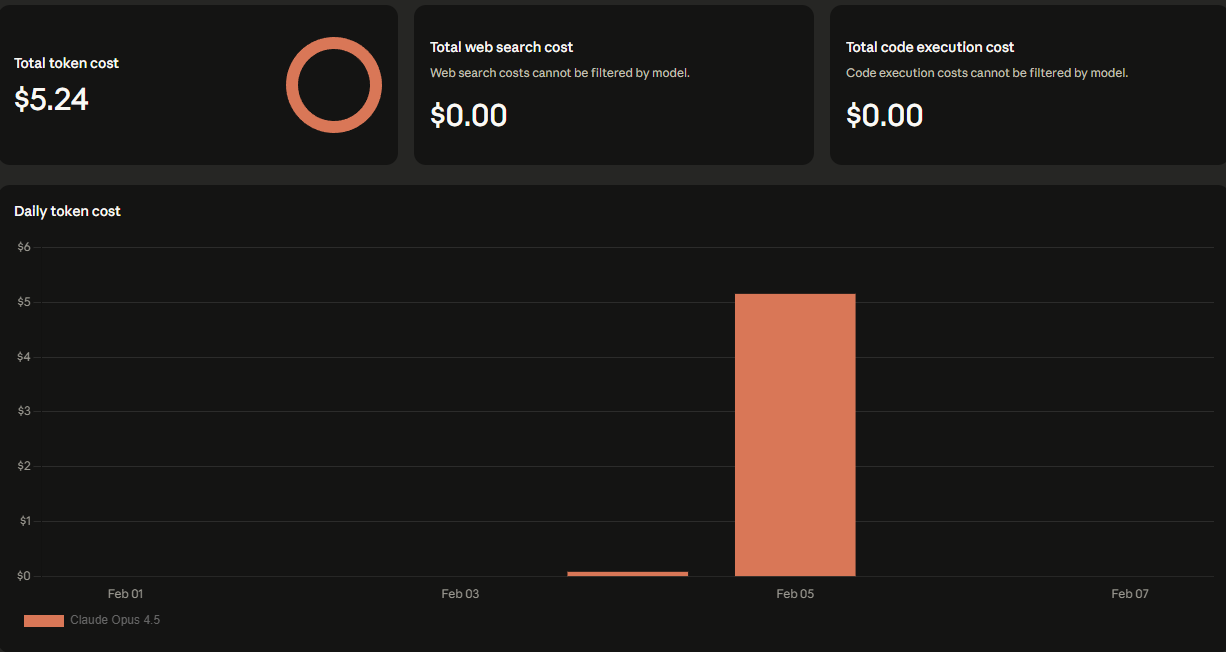
Opus to haiku... Still expensive
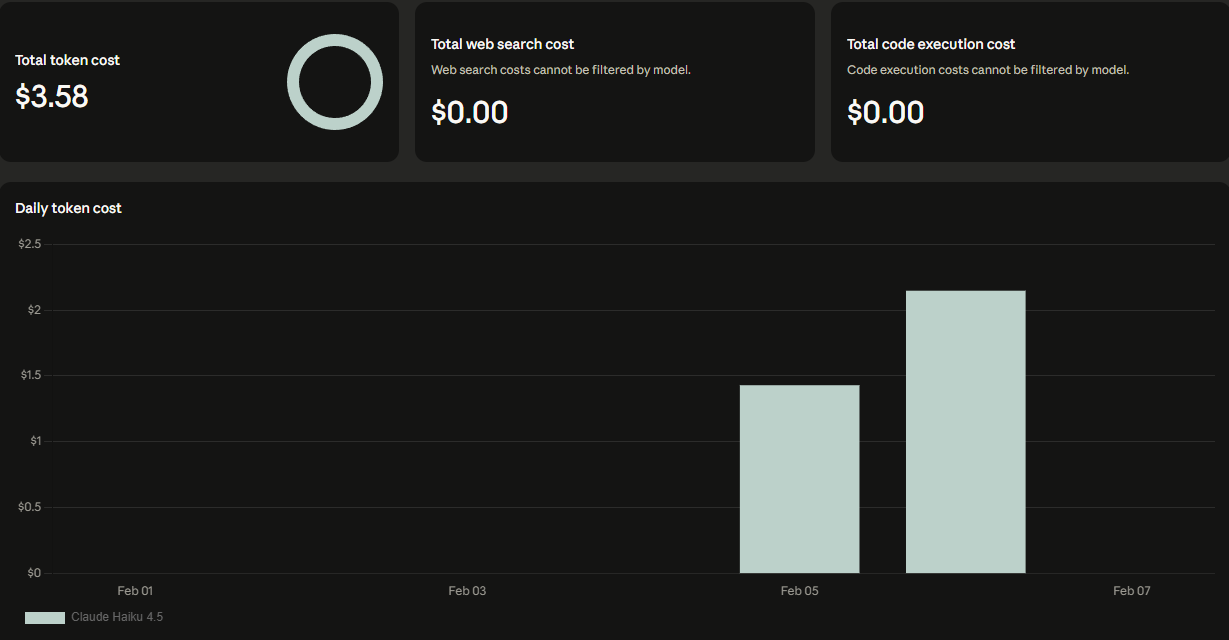
I then look to change the model from Opus to Haiku, as Haiku is the most value for performance bot. Changing the model took quite a fair bit of time, requiring me to understand how CloudFlare has set up it's deployment pipelines and where I can adjust the models as well as it's settings.
However, it still burnt through tokens like crazy. Within the next, I racked up another $4 USD just by talking casually with the bot. I was planning to get multiple gemini API tokens to rotate, before being advised by Gemini to consider DeepSeek V3, which has insanely cheap pricing.
DeepSeek... Security nightmare or hidden opportunity?
My initials thoughts was that DeepSeek would not be a good choice as it is known for having poor privacy protection. However, after much thought, since this is used for personal use and projects with not much financial impact, I decided to give it a chance.
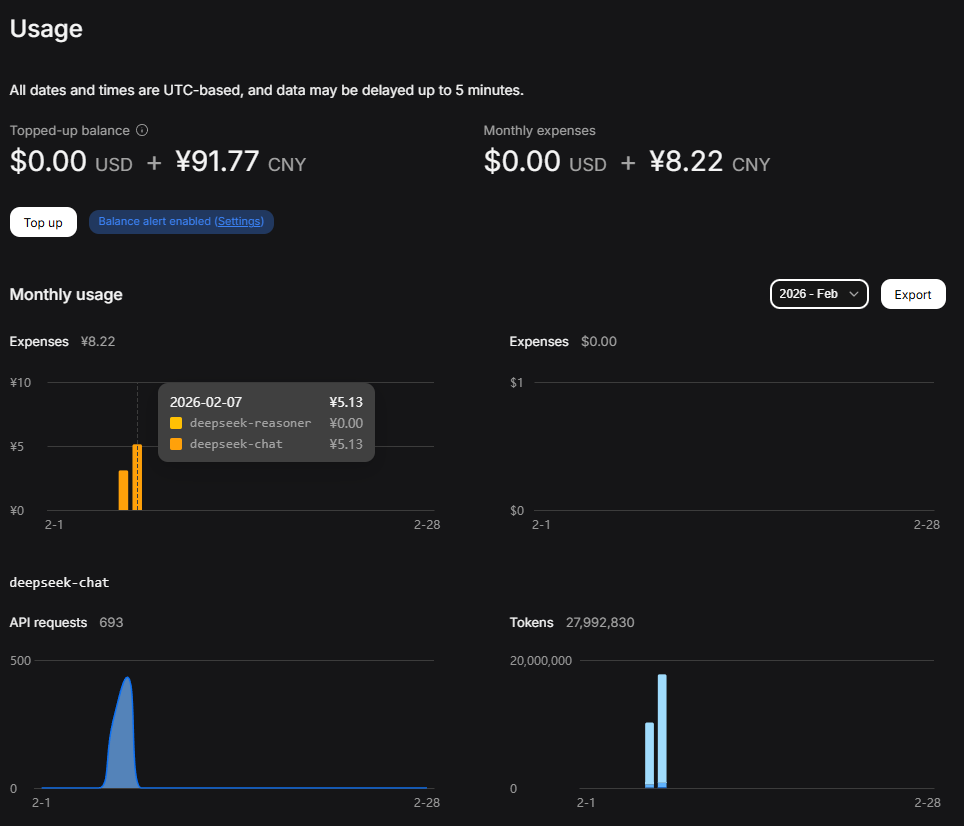
The performance was as good as haiku, while being 11x cheaper. I've finally solve my burn rate problem. Not through complex engineering like token and model switching, but choosing the correct solution for my use case.
Now, if I were to use it daily, it would just cost as much as $1 USD, which is cheap considering the benefits it brings to my life.
Equipping the bot with skills
Once I got the cost down to $1 a day, I stopped treating it like a chat partner and started building it into an asset. I didn't want a bot that just talks; I wanted a bot that executes.
I started "installing" skills, basically modular brain upgrades that turn it into a specialist on demand.
1. The Productivity Suite (Google Docs & Sheets) I taught the bot to interface directly with my Google Drive. It doesn't just read; it creates.
- Documentation: It updates its own documentation in real-time.
- Life Planning: It plans my weekends and logs everything into Google Sheets.
- Opportunity Logging: When it finds something interesting online, it doesn't just tell me—it adds a row to a spreadsheet for me to review later.

2. The "Opportunity Hunters" (Sniper Mode) I can't be everywhere at once, so I built two specific "Hunter" skills:
- Opportunity Hunter: Scrapes the web for specific openings (jobs, gigs, news) and alerts me.
- Buy Opportunity Hunter: A "Contrarian Sniper" for finance. It monitors market signals and filters out the noise, pinging me only when a specific "Buy" setup triggers. I don't stare at charts; the bot does.
3. The "Senior Engineer" (No More Spaghetti Code) I was sick of the bot rushing to write code like an intern: fast, buggy, and ignoring existing architecture. So, I built a Senior Engineer Skill. Now, before it writes a single line of code, it triggers a "Clarification Gate." It forces me to answer three questions about scale, edge cases, and design patterns. It refuses to code until it has read the README.md and the last 5 git commits. It’s annoying, it’s strict, and it writes better code than I do.
4. The Self-Healer (Git Skills) I taught it to use git properly. It can create its own branches, write its own updates, and commit fixes to its own repository. It’s basically performing surgery on itself.
5. The "Homework Helper" (End-to-End Automation) This isn't just "Write me an essay." I built a pipeline:
- Researcher: It scrapes the web for credible sources (blocking Wikipedia) and compiles citations.
- Drafter: It writes the content in strict APA 7 format.
- Publisher: It spins up a real Google Doc and populates it via API.
- The Secret Sauce: I integrated a "Humanizer" skill using the Sapling AI API. It loops through the draft, rewriting sentences to add "burstiness" and removing AI-flagged words like "delve" or "tapestry" until the detection score drops to zero.
I’m not doing the grunt work anymore. I’m just the decision maker at the top of the chain.
Built-in security
As I have been hacked before (see How I Accidentally Joined a Botnet: A React2Shell Post-Mortem), I understand how troublesome it can be to rotate credentials, perform cleanups, and do a post-moterm analysis.
Despite the naysayers online begging to stop deploying OpenClaw as it is a security nightmare, I decided to carry on safely, doing my due diligence.
I'm not reckless. I didn't just plug this thing into my personal WhatsApp and hand it the keys to my life.
I decided to apply the following techniques to help me secure my bot:
- Segregation. I created fresh, scratch accounts for the bot. If it goes rogue, my personal data is still safe.
- I leveraged on CloudFlare's Zero Trust System. To even access the bot's interface, you need my email code and whitelisting.
- Whitelisting. To talk to it on telegram, your handle has to be added to the allow-list.
- Containerisation. Since it's running on CloudFlare Workers/Containers, the impact of a hack would be tiny.
Conclusion
This entire journey—from struggling with a GUI on the MRT to deploying a self-healing, research-grade AI agent wasn't just about saving time. It was about leverage.
Most people use AI as a tool: a better calculator or a faster writer. I’m building a second brain.
By integrating these "God Mode" skills—the Finance Sniper, the Senior Engineer, the Homework Automator, I’ve effectively cloned the tedious parts of my life. The bot handles the execution, the formatting, the monitoring, and the initial code reviews. It clears the path so I can focus purely on strategy and high-level decisions.
And the best part? It’s secure. It’s cheap ($1/day!).
I’m not just "using" AI anymore. I’m supercharging myself.
And honestly? I think I’m just getting started. The next step is teaching it to deploy other agents. But that’s a story for another commit.